Originally published on Facebook, May 2, 2015....
DRAGON CUP 2015
Another tournament is in the record books, and more lessons learned. Training seemed very up and down this year, and even the day got off to a rocky start when we had to cruise the campus looking for a parking space. After all of that, I was able to get myself settled down and ready to perform, and was fortunate to come out with a silver medal in both of my events.
More lessons and impressions later, but what really crossed my mind at the end of the day was that something good usually only comes to you after one hell of a fight.
Wednesday, September 9, 2015

White Fringe
February 14, 2015 - Today I passed my White Fringe test, and achieved the first Tai Chi rank in the White Dragon Martial Arts curriculum.*
The test was an endurance challenge as much as anything else-I performed the entire Yang style 24 Step form twice (left side/right side). Each performance of the form takes approximately 9 minutes.
This is a big milestone, since it means you've passed the "beginner" level.
Next up-the 40 Step form!
*The school has since shifted its curriculum, so in later posts you'll see reference to a different rank (green fringe). Students coming in now start with a white fringed sash, instead of the "No Fringe/stripes" progression we went through previously. Under the new system, I am now a Green Fringe, and will test for my blue fringe once I master the next level of material.
The test was an endurance challenge as much as anything else-I performed the entire Yang style 24 Step form twice (left side/right side). Each performance of the form takes approximately 9 minutes.
This is a big milestone, since it means you've passed the "beginner" level.
Next up-the 40 Step form!
*The school has since shifted its curriculum, so in later posts you'll see reference to a different rank (green fringe). Students coming in now start with a white fringed sash, instead of the "No Fringe/stripes" progression we went through previously. Under the new system, I am now a Green Fringe, and will test for my blue fringe once I master the next level of material.
Trauma 143-Part 2
Continued from Part 1....

Trauma 143 - Part 2
The master in the desert
“My life has been lived in two halves. The first was becoming a world champion driver. The second is teaching the world to become champions.”
Bob Bondurant, founder and CEO-Bob Bondurant School of High Performance Driving
For the final stage of my accident recovery, and to grow beyond it, I began searching for a driving school where I could learn some specific accident avoidance techniques. Specifically, I wanted to learn skid and spin recovery techniques, but more importantly, to actually experience being in a skidding or spinning car in a safe and controlled environment, and to get some concentrated practice in these new skills and techniques. I wanted a lot of what racing drivers call “seat time.” I felt that the combination of these things would help me face and alleviate my fears about driving (and potential accidents), and would restore and build upon the confidence I had lost in my driving ability.
After a lot of research, I decided to enroll in the two-day High Performance Driving course at the Bob Bondurant School of High Performance Driving in Chandler, Arizona. Just as my Grandmaster, Doc-Fai Wong, is a Kung Fu master, Bob Bondurant is a master of speed and car control. He was a successful racer in the 60s, who discovered his talents for teaching driving in 1966 when he was hired as a consultant for a movie called "Grand Prix."
When his own racing career ended due to a severe accident, Bondurant founded his driving school, and has been at it ever since. As I write this, the school is celebrating its 47th anniversary at its 60 acre facility in the desert outside Phoenix. Similar to Grandmaster Wong’s lineage of Sifus and instructors, Bondurant has passed his methods down to a new generation of driving instructors.
Look ahead-Be smooth-Be accurate
The High Performance Driving course is serious, practical knowledge you can use every day on the road. I felt like a little bit of an “outsider” at first-most of the class were serious car enthusiasts, who owned high performance vehicles of their own. But when I stood up in class and explained why I was there, it was clear to everyone how serious I was about improving my skills, and the entire group gave me a warm welcome. After a tour of the school and a brief classroom session, I climbed into the driver's seat of a Camaro which would be my "office" and rolling classroom for the next two days-it was time to go to work.
We began with a simple (or so we thought) slalom between traffic cones, and moved on very quickly from that to other exercises, including Bondurant’s famous “Skid Car” (a specially modified sedan, which the instructor can put into a skid from their spot in the passenger seat while you’re driving). The desert air and sky may have felt wintry, but out on the 8 acre asphalt practice area, engines, brakes, and tires were heating up as we practiced our new skills over and over again under the watchful eye of our instructors.
Occasionally they would hop in the car and ride along with us, to provide comments and corrections as we drove through the different exercises. The pace of the instruction was intense, and I loved it-I wanted to absorb as much as I possibly could.
We ended the day with a 20 minute "Lead and Follow" session around the school's 1.6 mile, 15-turn road race course. The instructors pointed out that this was driving practice, not a race, and we were to stay in line, watch the instructor in the lead car closely, and follow his line through every corner. This was a challenging and demanding exercise, mentally and physically-imagine driving on a mountain road, where you have to steer a car through over 200 turns in 20 minutes.
As the first day ended, I was worn out, but excited and motivated at the same time. The specific instruction and positive coaching was great, but on a deeper level I realized that I’d found exactly what I needed. During the day, I became aware that it wasn’t just the instructors encouraging and challenging me – I was “coaching” myself as well. The methods and culture of the school had created an atmosphere where I felt motivated to challenge and push myself, and that would ultimately do more to restore my confidence than anything else we did in the class.
Tai Chi in the Skid Car
As our classroom instruction and in-car practice went on, I began to see similarities between what I was doing in the car, and my martial arts training. The instructors talked a lot about “vehicle dynamics”- how a car under acceleration will shift more weight to the rear wheels, while a car under braking will shift weight to the front wheels. As we tried different exercises, and practiced cornering and braking techniques, the instructors would quiz us afterward-"Where is the weight?" "What do you want the car to do?" Just as being aware of my stance and staying rooted helps my martial arts forms, this awareness of vehicle dynamics and weight distribution began to help my driving.
After my first session in the Skid Car, it hit me that skid recovery has some similarities to Push Hands practice in Tai Chi. You must sense the energy and direction of the car, then redirect it in the direction you want to go, in order to recover from the skid and regain control of the car. Visualizing this helped me to stay focused during these exercises.

Trauma 143 - Part 2
The master in the desert
“My life has been lived in two halves. The first was becoming a world champion driver. The second is teaching the world to become champions.”
Bob Bondurant, founder and CEO-Bob Bondurant School of High Performance Driving
For the final stage of my accident recovery, and to grow beyond it, I began searching for a driving school where I could learn some specific accident avoidance techniques. Specifically, I wanted to learn skid and spin recovery techniques, but more importantly, to actually experience being in a skidding or spinning car in a safe and controlled environment, and to get some concentrated practice in these new skills and techniques. I wanted a lot of what racing drivers call “seat time.” I felt that the combination of these things would help me face and alleviate my fears about driving (and potential accidents), and would restore and build upon the confidence I had lost in my driving ability.
After a lot of research, I decided to enroll in the two-day High Performance Driving course at the Bob Bondurant School of High Performance Driving in Chandler, Arizona. Just as my Grandmaster, Doc-Fai Wong, is a Kung Fu master, Bob Bondurant is a master of speed and car control. He was a successful racer in the 60s, who discovered his talents for teaching driving in 1966 when he was hired as a consultant for a movie called "Grand Prix."
When his own racing career ended due to a severe accident, Bondurant founded his driving school, and has been at it ever since. As I write this, the school is celebrating its 47th anniversary at its 60 acre facility in the desert outside Phoenix. Similar to Grandmaster Wong’s lineage of Sifus and instructors, Bondurant has passed his methods down to a new generation of driving instructors.
Look ahead-Be smooth-Be accurate
The High Performance Driving course is serious, practical knowledge you can use every day on the road. I felt like a little bit of an “outsider” at first-most of the class were serious car enthusiasts, who owned high performance vehicles of their own. But when I stood up in class and explained why I was there, it was clear to everyone how serious I was about improving my skills, and the entire group gave me a warm welcome. After a tour of the school and a brief classroom session, I climbed into the driver's seat of a Camaro which would be my "office" and rolling classroom for the next two days-it was time to go to work.
We began with a simple (or so we thought) slalom between traffic cones, and moved on very quickly from that to other exercises, including Bondurant’s famous “Skid Car” (a specially modified sedan, which the instructor can put into a skid from their spot in the passenger seat while you’re driving). The desert air and sky may have felt wintry, but out on the 8 acre asphalt practice area, engines, brakes, and tires were heating up as we practiced our new skills over and over again under the watchful eye of our instructors.
Occasionally they would hop in the car and ride along with us, to provide comments and corrections as we drove through the different exercises. The pace of the instruction was intense, and I loved it-I wanted to absorb as much as I possibly could.
We ended the day with a 20 minute "Lead and Follow" session around the school's 1.6 mile, 15-turn road race course. The instructors pointed out that this was driving practice, not a race, and we were to stay in line, watch the instructor in the lead car closely, and follow his line through every corner. This was a challenging and demanding exercise, mentally and physically-imagine driving on a mountain road, where you have to steer a car through over 200 turns in 20 minutes.
As the first day ended, I was worn out, but excited and motivated at the same time. The specific instruction and positive coaching was great, but on a deeper level I realized that I’d found exactly what I needed. During the day, I became aware that it wasn’t just the instructors encouraging and challenging me – I was “coaching” myself as well. The methods and culture of the school had created an atmosphere where I felt motivated to challenge and push myself, and that would ultimately do more to restore my confidence than anything else we did in the class.
Tai Chi in the Skid Car
As our classroom instruction and in-car practice went on, I began to see similarities between what I was doing in the car, and my martial arts training. The instructors talked a lot about “vehicle dynamics”- how a car under acceleration will shift more weight to the rear wheels, while a car under braking will shift weight to the front wheels. As we tried different exercises, and practiced cornering and braking techniques, the instructors would quiz us afterward-"Where is the weight?" "What do you want the car to do?" Just as being aware of my stance and staying rooted helps my martial arts forms, this awareness of vehicle dynamics and weight distribution began to help my driving.
After my first session in the Skid Car, it hit me that skid recovery has some similarities to Push Hands practice in Tai Chi. You must sense the energy and direction of the car, then redirect it in the direction you want to go, in order to recover from the skid and regain control of the car. Visualizing this helped me to stay focused during these exercises.
Final
Laps
The second day included another Skid Car
session, plus some emergency braking exercises, and a lot of work on the track
to refine our shifting and braking techniques. The emergency braking exercise began
with a rather exciting demonstration ride in a Chevy Tahoe with our
instructor-even a vehicle that large can safely come to a stop in a VERY short
distance!
We also did an autocross exercise, which is a
solo timed run on a marked road course. Nature provided some additional
challenges with a midday thunderstorm, so we had to chart a different line
through some of the turns to avoid the puddles. I was pleased to see my times
improve with every run.
Then it was on to our last session on the
track, which was even more enjoyable than the first, thanks to my newly
acquired cornering and braking skills. The track session took on something of a
serene, Zen-like quality, even with the noise and motion of the car. It was one
of those times where you find peace in the midst of a lot of sound and action.
The world narrowed down to the track and the
car-I was aware of other cars on the track, but my senses were all tuned to the
spot on the track the car would be in the next six seconds, and being
consistent in my technique: Scan the corner. Hard brake. Turn in and trail
brake. Steer to the apex of the corner and release. Downshift. Look ahead to
exit point and upshift. Let out the steering and accelerate out. And so it
went, corner after corner.
I was a bit sad as we pulled off the track at
the end of the day, because I knew this great experience was coming to an end.
I would miss the fun of learning, and comparing notes with my classmates about
how we each dealt with the challenges in the car. But I also felt really
uplifted and confident- any trauma remaining from the accident was released,
and my skill and confidence had risen to a new level. I was a different driver,
and a different person, than the one who had walked into the school just the
day before.
Trauma 143-Part 1
This piece was originally published at InformInspireChange (see blogroll)
Note: The title, "Trauma 143," refers to the case number I was assigned when I was taken to the Scripps Mercy Hospital Trauma Center after my accident.
Trauma 143 - Part 1
Just a normal day (or most of it was)......
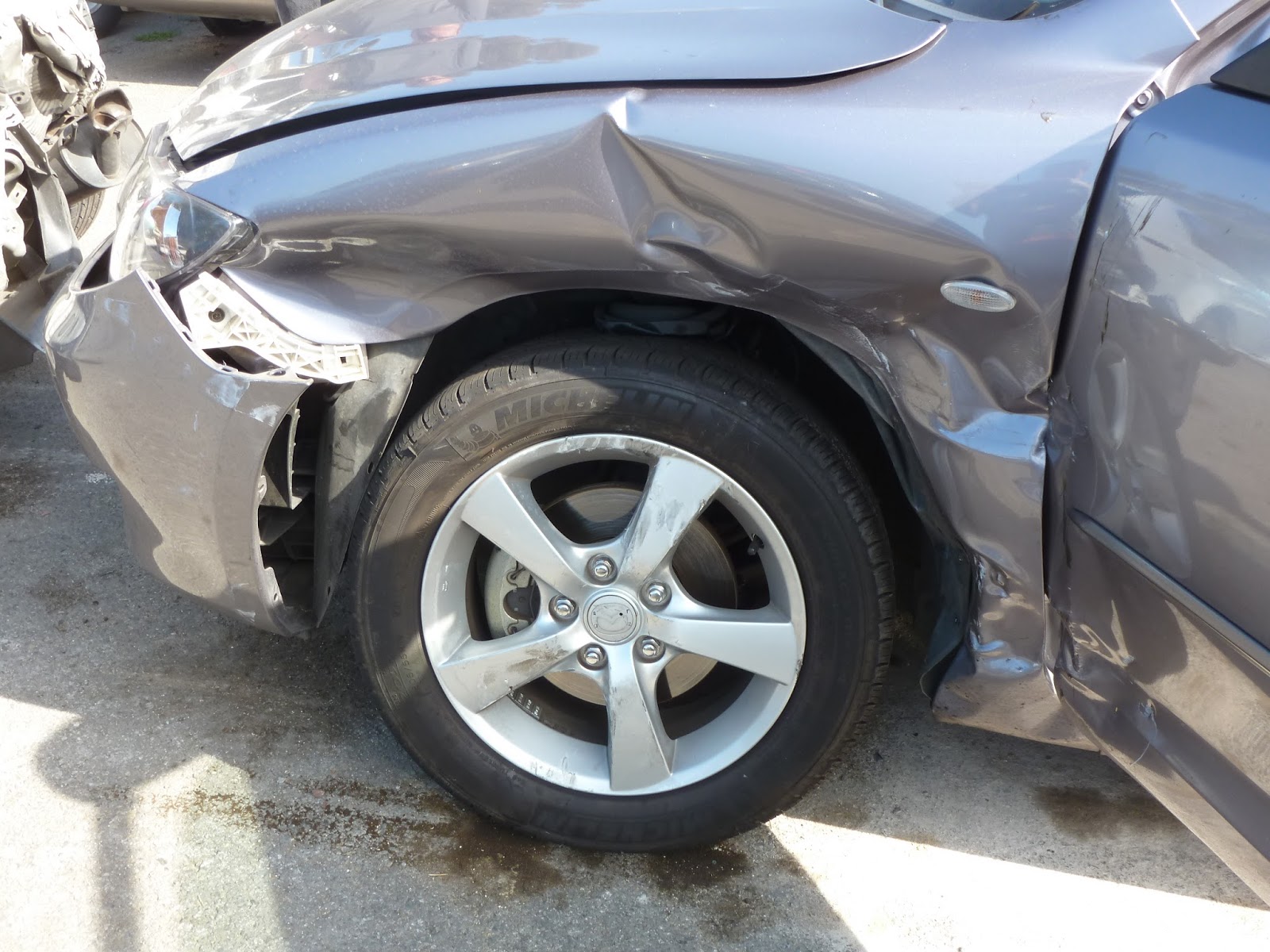
January 21,2014 was just another day. I headed home after work, looking forward to Tuesday night Kung fu. Driving 65 mph in the left lane on eastbound Highway 94, I saw something moving fast in my peripheral vision. A white compact was cutting across the lanes going approximately 75 mph. The driver was trying to make it to an off ramp which exits off the left side of 94. I braked hard in an attempt to give him enough space to miss me, but it was too late. I knew then that the white car was going to hit me, but had no idea how hard the impact would be.
Things got much worse in a hurry. My car was knocked into the concrete center divider, then rebounded back onto the freeway. I was gripping the wheel and put the clutch in to keep from stalling the engine, but it really didn’t matter- the car was basically out of control. I spun across 4 lanes of traffic, and finally came to a stop when the passenger side of my car slammed into the concrete barrier on the right shoulder.
To make a long story short, I ended up in the trauma center at Scripps Mercy Hospital, where a trauma team went over every inch of me. I was extremely fortunate to escape this accident with a two way whiplash, some strained muscles, and damage to some of my dental work.
PTSD-Who, me?
I recovered quite nicely from my physical injuries. But about 2-1/2 months after the accident, I noticed some emotional things happening which took me by surprise. I had become very forgetful- walking out to the car and absolutely blanking out about where I was going, or actually getting into the car, driving out of my neighborhood, and then forgetting where I was heading. I found myself having difficulty focusing and concentrating on things, and losing stuff around the house, which I rarely do.
I would get emotionally upset about things more easily, becoming more irritable and easily frustrated by little things, like not being able to find what I wanted at the grocery store. I started looking for little things to nit pick about my new car ("I hate this key fob").
I was also noticing a physical manifestation in my driving. I began driving in an overly cautious manner, and my confidence in my ability to drive and handle a car reverted back to the level it was when I first got my license. In middle age, I was once again a tentative teenage driver.
As all this became more and more obvious (not to mention disruptive at work and home), I decided to seek a professional opinion and do some research on my own as well. It turned out that I was experiencing a mild case of Post Traumatic Stress Disorder (PTSD).
I was really floored by this, and frankly felt a bit guilty, too-PTSD happened to people who experienced "real" trauma, like a former work mate of mine who did three tours in Vietnam. I had "just" been in a car accident. And, I hadn't had any nightmares/dreams about the accident since it happened. But as I thought more about it, something dawned on me:
This was probably the most physically violent episode I've ever experienced.
Typically, we tend to think of violence in the context of another human (or maybe a large animal) trying to harm or kill us. For those of us interested in martial arts and self-defense, I think this is especially true. But as I thought about the accident, I realized it had many of the hallmarks of a violent attack-random, sudden, messy, and relentless.
The "relentless" part was especially frightening. When someone attacks you physically, you can try and escape, or fight back, either hand to hand or with a weapon. And the physical forces are (somewhat, at least) proportionate-it's you against another of your species.
When my car got hit, there was no escape. I was suddenly in an out of control machine, with tremendous physical forces involved-more than my human body might potentially survive. The car was going 65 mph, and was suddenly and radically knocked off its course. I was immediately aware that my vehicle was unstoppable. It was going to keep rolling, skidding, and spinning, until it either dissipated all of its kinetic energy and came to a stop, or until it hit something large and solid which stopped it (which it did).
“Oh, it wasn’t that bad, then….”
I also reflected on the experience itself, and how others reacted when I talked about it. Sometimes, when hearing about the accident, people would react with a mixture of relief and dismissiveness- "oh, so it wasn't that bad then; you didn't have any broken bones." I would feel somewhat insulted and diminished by this-how dare they say that? How would they know how bad it was (or wasn’t)? It was hard to not take this personally, even though I knew others didn't mean anything personally negative when they commented on my experience.
To clarify things for myself, and help with the emotional effect of these comments, I refined my own definition and description of the incident:
"Last year, I was in a hit and run accident involving 4 cars, and my car was totaled. I feel extremely fortunate that I wasn’t injured as seriously as I might have been-this was a really hard collision, and it could have been much worse."
That's all I say now-If people want to know more about it that's fine, but I can't concern myself with anyone else's impression of the "seriousness" of my experience.
Coming back
At this point my martial arts training and discipline began to really help me. Thanks to the self-awareness and detachment I've learned, I knew something wasn't right emotionally, and my reactions were abnormal. I also knew it was my responsibility alone to take action and seek help. Others could (and did) support me emotionally, but just like in training, I had to do the work.
First, I sought help and treatment for the emotional issues with a health professional I'd worked with for a number of years. A key issue was my fear about being out of control in a moving vehicle. I want to be the one who decides where and how fast I go, which is why I don’t like roller coasters, and other rides, and I’m not too crazy about flying, although I have gotten used to it. This was a significant part of the fear I felt during the accident, and afterward. I began keeping a journal of my emotional reactions to various situations, especially any reactions I felt were out of the ordinary, so I could monitor what I was feeling.
Second, I made a greater effort than usual to be consistent with my martial arts training. Not only was the exercise helping with physical recovery and regaining strength, it was an outlet from the fear and tension I was feeling. Practicing detachment became more important than ever.
The final phase of my recovery would involve more work, time, and expense, but I knew I had to do something in order to fully face the fears I was feeling, and regain my confidence behind the wheel. For that, you could say I did what some people do when they’re looking for answers, and need to test themselves.
I went into the desert.
Note: The title, "Trauma 143," refers to the case number I was assigned when I was taken to the Scripps Mercy Hospital Trauma Center after my accident.
Trauma 143 - Part 1
Just a normal day (or most of it was)......
January 21,2014 was just another day. I headed home after work, looking forward to Tuesday night Kung fu. Driving 65 mph in the left lane on eastbound Highway 94, I saw something moving fast in my peripheral vision. A white compact was cutting across the lanes going approximately 75 mph. The driver was trying to make it to an off ramp which exits off the left side of 94. I braked hard in an attempt to give him enough space to miss me, but it was too late. I knew then that the white car was going to hit me, but had no idea how hard the impact would be.
Things got much worse in a hurry. My car was knocked into the concrete center divider, then rebounded back onto the freeway. I was gripping the wheel and put the clutch in to keep from stalling the engine, but it really didn’t matter- the car was basically out of control. I spun across 4 lanes of traffic, and finally came to a stop when the passenger side of my car slammed into the concrete barrier on the right shoulder.
To make a long story short, I ended up in the trauma center at Scripps Mercy Hospital, where a trauma team went over every inch of me. I was extremely fortunate to escape this accident with a two way whiplash, some strained muscles, and damage to some of my dental work.
PTSD-Who, me?
I recovered quite nicely from my physical injuries. But about 2-1/2 months after the accident, I noticed some emotional things happening which took me by surprise. I had become very forgetful- walking out to the car and absolutely blanking out about where I was going, or actually getting into the car, driving out of my neighborhood, and then forgetting where I was heading. I found myself having difficulty focusing and concentrating on things, and losing stuff around the house, which I rarely do.
I would get emotionally upset about things more easily, becoming more irritable and easily frustrated by little things, like not being able to find what I wanted at the grocery store. I started looking for little things to nit pick about my new car ("I hate this key fob").
I was also noticing a physical manifestation in my driving. I began driving in an overly cautious manner, and my confidence in my ability to drive and handle a car reverted back to the level it was when I first got my license. In middle age, I was once again a tentative teenage driver.
As all this became more and more obvious (not to mention disruptive at work and home), I decided to seek a professional opinion and do some research on my own as well. It turned out that I was experiencing a mild case of Post Traumatic Stress Disorder (PTSD).
I was really floored by this, and frankly felt a bit guilty, too-PTSD happened to people who experienced "real" trauma, like a former work mate of mine who did three tours in Vietnam. I had "just" been in a car accident. And, I hadn't had any nightmares/dreams about the accident since it happened. But as I thought more about it, something dawned on me:
This was probably the most physically violent episode I've ever experienced.
Typically, we tend to think of violence in the context of another human (or maybe a large animal) trying to harm or kill us. For those of us interested in martial arts and self-defense, I think this is especially true. But as I thought about the accident, I realized it had many of the hallmarks of a violent attack-random, sudden, messy, and relentless.
The "relentless" part was especially frightening. When someone attacks you physically, you can try and escape, or fight back, either hand to hand or with a weapon. And the physical forces are (somewhat, at least) proportionate-it's you against another of your species.
When my car got hit, there was no escape. I was suddenly in an out of control machine, with tremendous physical forces involved-more than my human body might potentially survive. The car was going 65 mph, and was suddenly and radically knocked off its course. I was immediately aware that my vehicle was unstoppable. It was going to keep rolling, skidding, and spinning, until it either dissipated all of its kinetic energy and came to a stop, or until it hit something large and solid which stopped it (which it did).
“Oh, it wasn’t that bad, then….”
I also reflected on the experience itself, and how others reacted when I talked about it. Sometimes, when hearing about the accident, people would react with a mixture of relief and dismissiveness- "oh, so it wasn't that bad then; you didn't have any broken bones." I would feel somewhat insulted and diminished by this-how dare they say that? How would they know how bad it was (or wasn’t)? It was hard to not take this personally, even though I knew others didn't mean anything personally negative when they commented on my experience.
To clarify things for myself, and help with the emotional effect of these comments, I refined my own definition and description of the incident:
"Last year, I was in a hit and run accident involving 4 cars, and my car was totaled. I feel extremely fortunate that I wasn’t injured as seriously as I might have been-this was a really hard collision, and it could have been much worse."
That's all I say now-If people want to know more about it that's fine, but I can't concern myself with anyone else's impression of the "seriousness" of my experience.
Coming back
At this point my martial arts training and discipline began to really help me. Thanks to the self-awareness and detachment I've learned, I knew something wasn't right emotionally, and my reactions were abnormal. I also knew it was my responsibility alone to take action and seek help. Others could (and did) support me emotionally, but just like in training, I had to do the work.
First, I sought help and treatment for the emotional issues with a health professional I'd worked with for a number of years. A key issue was my fear about being out of control in a moving vehicle. I want to be the one who decides where and how fast I go, which is why I don’t like roller coasters, and other rides, and I’m not too crazy about flying, although I have gotten used to it. This was a significant part of the fear I felt during the accident, and afterward. I began keeping a journal of my emotional reactions to various situations, especially any reactions I felt were out of the ordinary, so I could monitor what I was feeling.
Second, I made a greater effort than usual to be consistent with my martial arts training. Not only was the exercise helping with physical recovery and regaining strength, it was an outlet from the fear and tension I was feeling. Practicing detachment became more important than ever.
The final phase of my recovery would involve more work, time, and expense, but I knew I had to do something in order to fully face the fears I was feeling, and regain my confidence behind the wheel. For that, you could say I did what some people do when they’re looking for answers, and need to test themselves.
I went into the desert.
Plum Blossom Time-Part 1
Originally posted on FB September 20, 2014-

PLUM BLOSSOM TIME - PART 1
After attending last year’s Plum Blossom Federation tournament as a spectator, I knew I’d want to return and participate as a competitor. I look forward to the Dragon Cup, and my experiences there have been great, but this tournament is something special. You really get the sense that you’re part of a much larger martial arts community, expanding outward from your own school to the other White Dragon schools and the various other Federation schools, including Grandmaster Wong’s own school in San Francisco.
My goal for this tournament was actually quite simple-I wanted to do the same events/forms I did at the Dragon Cup, only much better. This drove my training plan, and allowed me to train mostly on my own, while continuing my lessons and working toward my fringe. Although I mainly trained on my own, I had a lot of resources to draw on. Instructor comments and corrections from my private lessons and in group classes were applied to my tournament hand form to improve it (you can never work on details too much in Tai Chi). I also found some of the photos we took at the Dragon Cup to be helpful in picking up details on the flute form.
As so often happens when preparing for an event like this, other life events can drain you or pull you away from what you want to do. With the Dragon Cup, it was work stress and minor nagging aches and pains. This time around, I not only had stress and anxiety at work, I faced a family crisis when my mother passed away suddenly in July. I pondered not going to the tournament, but decided to press on and carve out as much personal time as I could to train. The tournament, and preparation for it, became something of a relief valve for me-time just for me, where I could step away from everything else and recharge by focusing on the entire tournament experience. While I still wanted to improve and do well, my main focus shifted to just being there and experiencing it all. (This all influenced my decision to not enter the Push Hands event in this tournament-I was simply running out of training and practice time. I also suspected the level of competition would be higher than what I was capable of; watching the event during the tournament proved me right. Something to work toward for next year.)
In the end, I achieved my goal - my performance in both events was much improved over my Dragon Cup performances. This was validated not only by my numerical scores, but by my own awareness of what I was doing (more on that shortly). I also was fortunate enough to run into a senior instructor who had judged one of my events (weapon form) at the Dragon Cup. He saw my flute form performance and complimented me on my improvement.
Even taking into account variations in consistency, rigor in grading, and simply personal preferences among judges, it was still very gratifying to see my scores in the Plum Blossom tournament. In hand form (24 Step), I got a 6.1, 6.2, and 6.4. In Open Weapon form (flute), I scored 7.2, 7.4, and 7.6. (In this tournament, you get to see your score from each judge and they score you in 10th of a point increments). I was quite excited to tie for third in the weapon form competition-although I did not medal, I was very pleased to do as well as I did in a group of 14 competitors, the great majority of whom were 2 (or more) ranks above me.
Overall, it was a great day, and one I'll remember for a long time.
Scroll down to the next post for Part 2......

PLUM BLOSSOM TIME - PART 1
After attending last year’s Plum Blossom Federation tournament as a spectator, I knew I’d want to return and participate as a competitor. I look forward to the Dragon Cup, and my experiences there have been great, but this tournament is something special. You really get the sense that you’re part of a much larger martial arts community, expanding outward from your own school to the other White Dragon schools and the various other Federation schools, including Grandmaster Wong’s own school in San Francisco.
My goal for this tournament was actually quite simple-I wanted to do the same events/forms I did at the Dragon Cup, only much better. This drove my training plan, and allowed me to train mostly on my own, while continuing my lessons and working toward my fringe. Although I mainly trained on my own, I had a lot of resources to draw on. Instructor comments and corrections from my private lessons and in group classes were applied to my tournament hand form to improve it (you can never work on details too much in Tai Chi). I also found some of the photos we took at the Dragon Cup to be helpful in picking up details on the flute form.
As so often happens when preparing for an event like this, other life events can drain you or pull you away from what you want to do. With the Dragon Cup, it was work stress and minor nagging aches and pains. This time around, I not only had stress and anxiety at work, I faced a family crisis when my mother passed away suddenly in July. I pondered not going to the tournament, but decided to press on and carve out as much personal time as I could to train. The tournament, and preparation for it, became something of a relief valve for me-time just for me, where I could step away from everything else and recharge by focusing on the entire tournament experience. While I still wanted to improve and do well, my main focus shifted to just being there and experiencing it all. (This all influenced my decision to not enter the Push Hands event in this tournament-I was simply running out of training and practice time. I also suspected the level of competition would be higher than what I was capable of; watching the event during the tournament proved me right. Something to work toward for next year.)
In the end, I achieved my goal - my performance in both events was much improved over my Dragon Cup performances. This was validated not only by my numerical scores, but by my own awareness of what I was doing (more on that shortly). I also was fortunate enough to run into a senior instructor who had judged one of my events (weapon form) at the Dragon Cup. He saw my flute form performance and complimented me on my improvement.
Even taking into account variations in consistency, rigor in grading, and simply personal preferences among judges, it was still very gratifying to see my scores in the Plum Blossom tournament. In hand form (24 Step), I got a 6.1, 6.2, and 6.4. In Open Weapon form (flute), I scored 7.2, 7.4, and 7.6. (In this tournament, you get to see your score from each judge and they score you in 10th of a point increments). I was quite excited to tie for third in the weapon form competition-although I did not medal, I was very pleased to do as well as I did in a group of 14 competitors, the great majority of whom were 2 (or more) ranks above me.
Overall, it was a great day, and one I'll remember for a long time.
Scroll down to the next post for Part 2......
Plum Blossom Time-Part 2
Originally posted on FB November 25, 2014-


PLUM BLOSSOM TIME – PART 2
(The long-promised follow up and “Lessons Learned” post about my experiences at the 2014 Plum Blossom Federation tournament in San Francisco)-
As I wrote in Part 1, this tournament was a great experience. Recent events have made me even more grateful for this experience. I became unemployed as of last Friday, so I’m even more grateful that I went while I could afford to make the trip. These tournaments are always great learning experiences, and this one was no exception.
Here are some lessons I took away from this tournament, along with some things I learned about myself:
Mentally, you need to be ready to go the minute you walk through the door. Certainly you want to stretch, warm up, and have some quiet time, but the schedules typically fluctuate at these events, and your event could come up sooner than you think. I was outside stretching and warming up when I heard the first call for my Tai Chi hand form event. I had to dash back in, and stash my backpack under one of the judges’ chairs because there wasn’t time to go back to my seat. This is where visualization comes in-I had already” walked through” my routine mentally shortly after I arrived at the arena earlier that morning.
You need to find a spot to warm up, and you may need to be a little aggressive in “claiming your territory” to do it, especially in a smaller venue. I’m not suggesting anyone act rudely, but once you begin your warmup, you don’t need to give that space up and move just because some people drift into that area and start socializing. They can always find another spot. I will say, though, that this type of practice should be limited to stretching and hand form practice-find a more isolated spot for weapons practice.
Every venue will have its quirks, and you simply have to deal with them-it’s part of being a martial artist and a competitor. For example, the Kezar Pavilion (site of the Plum Blossom tournament) is a very small venue. It doesn’t have a lot of open space where you can stretch, warm up, etc. This means you’ll probably end up outside, on a less than perfect surface. You need to be prepared for this mentally, so it doesn’t throw you off. Also, they don’t put down mats on the floor. You’re performing on a very shiny, slightly slick basketball floor, so it might help to wear different shoes than you normally would at school. (I’m glad I ended up not doing Push Hands this year; several competitors wearing the same kind of shoes I had slipped and nearly went down during their bouts.) After my “mad dash” to the first event, I learned that if I went outside and stayed near one of the emergency exit doors on the sides of the Pavilion (some of which were opened for ventilation), I could clearly hear all of the announcements, and get back inside in plenty of time for my event.
This tournament really showed me the value of staying relaxed, and just experiencing the whole event, without expecting everything to be “perfect” or to go a certain way. Keeping this in mind actually helped my confidence a lot when I went on the floor. Sure, I practiced a lot leading up to the tournament, but consciously choosing to stay relaxed built on that and really made the difference. I was much more aware of everything I was doing-not only did this state allow me to make some “real time” corrections in my form as I went along, it really enriched the whole experience. I had hoped that someone would get a snapshot or two of me performing, and was initially a bit disappointed when that didn’t happen. The more I reflected on it though, I realized that I had wanted a picture of myself, but didn’t NEED one to fully remember and reflect on my experiences – I know what I did that day, and what it felt like, because I was truly “there”.
The awareness also allowed some more of my natural determination to kick in-as so often happens, you’ll practice a particular part of your form multiple times and execute it perfectly, only to run into trouble when you actually perform. There is a toe kick sequence in my flute form, which I must have practiced 10-12 times outside and felt really strong doing it. Sure enough, during my performance, the right leg rose up into the crane and I started to feel wobbly. I had a quick internal argument with myself, where I debated tapping my toe and starting that section again. Ultimately, in my mind I said, “NO! I did not endure all of the practice, and come all this way, to let down now. I will hold my crane and do my kick, even if I look wobbly and score poorly because of it. I will NOT walk off this floor feeling disappointed in myself.” I held on, and finished the kick, although it was a bit shaky. (In the interest of full disclosure, though, when it turned out I’d tied for third and they asked me to come out onto the floor again, I was intensely relieved that the judges only asked us for a 30-second performance. This meant I wouldn’t need to do the kick again since it was near the end of the form. My feeling was more along the lines of, “Woo hoo! I get to go again!!’).
This was a significant competition and a significant performance for me in both events, and I’m so grateful I was able to go and participate.
Here are some lessons I took away from this tournament, along with some things I learned about myself:
Mentally, you need to be ready to go the minute you walk through the door. Certainly you want to stretch, warm up, and have some quiet time, but the schedules typically fluctuate at these events, and your event could come up sooner than you think. I was outside stretching and warming up when I heard the first call for my Tai Chi hand form event. I had to dash back in, and stash my backpack under one of the judges’ chairs because there wasn’t time to go back to my seat. This is where visualization comes in-I had already” walked through” my routine mentally shortly after I arrived at the arena earlier that morning.
You need to find a spot to warm up, and you may need to be a little aggressive in “claiming your territory” to do it, especially in a smaller venue. I’m not suggesting anyone act rudely, but once you begin your warmup, you don’t need to give that space up and move just because some people drift into that area and start socializing. They can always find another spot. I will say, though, that this type of practice should be limited to stretching and hand form practice-find a more isolated spot for weapons practice.
Every venue will have its quirks, and you simply have to deal with them-it’s part of being a martial artist and a competitor. For example, the Kezar Pavilion (site of the Plum Blossom tournament) is a very small venue. It doesn’t have a lot of open space where you can stretch, warm up, etc. This means you’ll probably end up outside, on a less than perfect surface. You need to be prepared for this mentally, so it doesn’t throw you off. Also, they don’t put down mats on the floor. You’re performing on a very shiny, slightly slick basketball floor, so it might help to wear different shoes than you normally would at school. (I’m glad I ended up not doing Push Hands this year; several competitors wearing the same kind of shoes I had slipped and nearly went down during their bouts.) After my “mad dash” to the first event, I learned that if I went outside and stayed near one of the emergency exit doors on the sides of the Pavilion (some of which were opened for ventilation), I could clearly hear all of the announcements, and get back inside in plenty of time for my event.
This tournament really showed me the value of staying relaxed, and just experiencing the whole event, without expecting everything to be “perfect” or to go a certain way. Keeping this in mind actually helped my confidence a lot when I went on the floor. Sure, I practiced a lot leading up to the tournament, but consciously choosing to stay relaxed built on that and really made the difference. I was much more aware of everything I was doing-not only did this state allow me to make some “real time” corrections in my form as I went along, it really enriched the whole experience. I had hoped that someone would get a snapshot or two of me performing, and was initially a bit disappointed when that didn’t happen. The more I reflected on it though, I realized that I had wanted a picture of myself, but didn’t NEED one to fully remember and reflect on my experiences – I know what I did that day, and what it felt like, because I was truly “there”.
The awareness also allowed some more of my natural determination to kick in-as so often happens, you’ll practice a particular part of your form multiple times and execute it perfectly, only to run into trouble when you actually perform. There is a toe kick sequence in my flute form, which I must have practiced 10-12 times outside and felt really strong doing it. Sure enough, during my performance, the right leg rose up into the crane and I started to feel wobbly. I had a quick internal argument with myself, where I debated tapping my toe and starting that section again. Ultimately, in my mind I said, “NO! I did not endure all of the practice, and come all this way, to let down now. I will hold my crane and do my kick, even if I look wobbly and score poorly because of it. I will NOT walk off this floor feeling disappointed in myself.” I held on, and finished the kick, although it was a bit shaky. (In the interest of full disclosure, though, when it turned out I’d tied for third and they asked me to come out onto the floor again, I was intensely relieved that the judges only asked us for a 30-second performance. This meant I wouldn’t need to do the kick again since it was near the end of the form. My feeling was more along the lines of, “Woo hoo! I get to go again!!’).
This was a significant competition and a significant performance for me in both events, and I’m so grateful I was able to go and participate.
Grief
One of my favorite Dean Koontz quotes, in memory of my mother (Originally posted on FB July 27, 2014)-
Dean Koontz, from "Odd Hours"
“Grief can destroy you --or focus you. You can decide a relationship was all for nothing if it had to end in death, and you alone. OR you can realize that every moment of it had more meaning than you dared to recognize at the time, so much meaning it scared you, so you just lived, just took for granted the love and laughter of each day, and didn't allow yourself to consider the sacredness of it.
But when it's over and you're alone, you begin to see that it wasn't just a movie and a dinner together, not just watching sunsets together, not just scrubbing a floor or washing dishes together or worrying over a high electric bill. It was everything, it was the why of life, every event and precious moment of it.
The answer to the mystery of existence is the love you shared sometimes so imperfectly, and when the loss wakes you to the deeper beauty of it, to the sanctity of it, you can't get off your knees for a long time, you're driven to your knees not by the weight of the loss but by gratitude for what preceded the loss. And the ache is always there, but one day not the emptiness, because to nurture the emptiness, to take solace in it, is to disrespect the gift of life.”
Dean Koontz, from "Odd Hours"
"I Have A Story...."
Originally posted on FB May 25, 2014-
"I have a story...."
These words came out of my mouth Saturday morning, and led to an awesome experience. The White Dragon martial arts schools (the entire chain, not just my school), are updating their website, and had asked for students to share testimonials about their martial arts experience. Now, as much as I've written about my martial arts training and adventures, sitting down in front of a video camera and talking about it is the last thing I thought I'd ever do. So, my initial reaction was, "not me."
Still, I wanted to support the effort, so Saturday morning, I headed over to the filming site (the Mira Mesa school). The intent was to film the interviews against the backdrop of a group class in session, so White Dragon invited anyone who was interested to attend group classes at the filming site that day. I figured my contribution would be to perform in the background as an "extra" (which I did). Until I arrived at the school, this was still my plan.
On the way over, I was thinking about my accident in January. It was on my mind since part of the weekend's agenda was to go through the increasing pile of insurance and medical paperwork related to it. I was also thinking about my upcoming trip to the dentist; as it turns out, some of my dental work (crowns) was damaged in the impact, so I've got another thing to deal with related to the accident.
I arrived at school, got into uniform, and went out onto the mat for group class. One of the instructors was making the rounds, offering everyone a "last chance" at signing up for a video interview. She asked us if anyone were willing to talk about how training at White Dragon had changed their life, or "if you just have a story."
Something about what she said lit up the idea/inspiration area in my brain. I raised my hand, and said,
"I have a story."
The videos were done in an informal interview format; one of the Sifus from the other schools interviewed me. After introducing myself (and mentioning my school :-) ), we talked a bit about how I'd gotten interested in Tai Chi in particular, the challenges I'd faced in training, and the gains I'd made in my martial arts work.
He also asked me about my most significant memory (this year's Dragon Cup), and then asked me what I considered my greatest victory in martial arts so far.
I said, "my martial arts training helped me survive the most violent encounter of my life-but not in the way you might think."
I went on to tell him about how the improvement in my conditioning helped me to get through my auto accident in January; I believe my improved flexibility aided in absorbing/reacting to the impact of the crash, as well as helping my recovery from the injuries I did suffer. I also talked about how the awareness and focus I've learned through martial arts is helping me deal with my accident-related PTSD issues.
I closed the interview by encouraging anyone interested in martial arts to give it a try, and commented on the very supportive atmosphere at my school (and all the others, I'm sure).
I'm not sure if they will use my interview, but I'm glad I did it. Several people came up to me afterward and thanked me for sharing my story, so even if I only reached/helped someone in the room, it was worth it.
I overheard some things in the other interviews which touched my heart as well. One of the reasons I got into Tai Chi was specifically to improve my balance and coordination-it's something I have struggled with all my life, and continues to be a challenge in my practice (although I have improved quite a bit from when I started). I was surprised and touched to hear several men in my own age bracket speak along the same lines. I was especially touched by one gentleman who spoke about having self-esteem issues related to doing "physical stuff", even after achieving a lot of success in the military and in the business world.
Hearing that brought back a lot of memories of my own struggles with physical activity growing up (see my early post, "Grace"). It was just another reminder that, even though each of our stories is unique to us, we are rarely, if ever, truly alone in dealing with feelings like this, and the memories and feelings of the boys we once were can stay with us a long, long, time.
It was a special and emotional day that I'll remember for a long, long time.
"I have a story...."
These words came out of my mouth Saturday morning, and led to an awesome experience. The White Dragon martial arts schools (the entire chain, not just my school), are updating their website, and had asked for students to share testimonials about their martial arts experience. Now, as much as I've written about my martial arts training and adventures, sitting down in front of a video camera and talking about it is the last thing I thought I'd ever do. So, my initial reaction was, "not me."
Still, I wanted to support the effort, so Saturday morning, I headed over to the filming site (the Mira Mesa school). The intent was to film the interviews against the backdrop of a group class in session, so White Dragon invited anyone who was interested to attend group classes at the filming site that day. I figured my contribution would be to perform in the background as an "extra" (which I did). Until I arrived at the school, this was still my plan.
On the way over, I was thinking about my accident in January. It was on my mind since part of the weekend's agenda was to go through the increasing pile of insurance and medical paperwork related to it. I was also thinking about my upcoming trip to the dentist; as it turns out, some of my dental work (crowns) was damaged in the impact, so I've got another thing to deal with related to the accident.
I arrived at school, got into uniform, and went out onto the mat for group class. One of the instructors was making the rounds, offering everyone a "last chance" at signing up for a video interview. She asked us if anyone were willing to talk about how training at White Dragon had changed their life, or "if you just have a story."
Something about what she said lit up the idea/inspiration area in my brain. I raised my hand, and said,
"I have a story."
The videos were done in an informal interview format; one of the Sifus from the other schools interviewed me. After introducing myself (and mentioning my school :-) ), we talked a bit about how I'd gotten interested in Tai Chi in particular, the challenges I'd faced in training, and the gains I'd made in my martial arts work.
He also asked me about my most significant memory (this year's Dragon Cup), and then asked me what I considered my greatest victory in martial arts so far.
I said, "my martial arts training helped me survive the most violent encounter of my life-but not in the way you might think."
I went on to tell him about how the improvement in my conditioning helped me to get through my auto accident in January; I believe my improved flexibility aided in absorbing/reacting to the impact of the crash, as well as helping my recovery from the injuries I did suffer. I also talked about how the awareness and focus I've learned through martial arts is helping me deal with my accident-related PTSD issues.
I closed the interview by encouraging anyone interested in martial arts to give it a try, and commented on the very supportive atmosphere at my school (and all the others, I'm sure).
I'm not sure if they will use my interview, but I'm glad I did it. Several people came up to me afterward and thanked me for sharing my story, so even if I only reached/helped someone in the room, it was worth it.
I overheard some things in the other interviews which touched my heart as well. One of the reasons I got into Tai Chi was specifically to improve my balance and coordination-it's something I have struggled with all my life, and continues to be a challenge in my practice (although I have improved quite a bit from when I started). I was surprised and touched to hear several men in my own age bracket speak along the same lines. I was especially touched by one gentleman who spoke about having self-esteem issues related to doing "physical stuff", even after achieving a lot of success in the military and in the business world.
Hearing that brought back a lot of memories of my own struggles with physical activity growing up (see my early post, "Grace"). It was just another reminder that, even though each of our stories is unique to us, we are rarely, if ever, truly alone in dealing with feelings like this, and the memories and feelings of the boys we once were can stay with us a long, long, time.
It was a special and emotional day that I'll remember for a long, long time.
Dragon Cup 2014
Originally posted on FB May 6, 2014-
DRAGON CUP REPORT
Over the last couple of days, I've really enjoyed all of the online photo sharing, commenting, and general bantering about the fun and adventures everybody had at Saturday's Dragon Cup. Now, I'd like to put down some more serious thoughts and recollections.
First, I'm really pleased overall with how well I was able to follow my plan in prepping for the tournament and for tournament day itself. I was comfortable, well rested and hydrated, and didn't feel stressed. An improvement over last year. Looking ahead, I'll do more warm up exercise than I did this year, but overall it was a positive.
Whoever said, "80% of success is showing up" could have been talking about my Push Hands experience. As one of only 3 competitors in my division I was basically guaranteed a medal-but I didn't know that until I showed up and competed. I originally thought, "that's cool-it will help our school standing" when I received my medal, but as the weekend went on, something became more and more clear to me:
I may not have defeated anyone in the ring, but by showing up and competing, I realized I had prevailed over a number of things , including minor injuries, an 18 hour work/travel day on Monday, and my own doubts about competing in Push Hands. I will keep the medal.
I'm proud of my school's turnout-hope to see even more of my El Cajon brothers and sisters out on the floor next year. I also continue to be impressed with all of the hard work from the judges-hope I remembered to thank them at each of my events.
While I didn't medal in each event per my original goals, I did have a big "win" in that I was able to stay calm and project confidence when I stepped into the ring. I'm proud of that.
Over the last couple of days, I've really enjoyed all of the online photo sharing, commenting, and general bantering about the fun and adventures everybody had at Saturday's Dragon Cup. Now, I'd like to put down some more serious thoughts and recollections.
First, I'm really pleased overall with how well I was able to follow my plan in prepping for the tournament and for tournament day itself. I was comfortable, well rested and hydrated, and didn't feel stressed. An improvement over last year. Looking ahead, I'll do more warm up exercise than I did this year, but overall it was a positive.
Whoever said, "80% of success is showing up" could have been talking about my Push Hands experience. As one of only 3 competitors in my division I was basically guaranteed a medal-but I didn't know that until I showed up and competed. I originally thought, "that's cool-it will help our school standing" when I received my medal, but as the weekend went on, something became more and more clear to me:
I may not have defeated anyone in the ring, but by showing up and competing, I realized I had prevailed over a number of things , including minor injuries, an 18 hour work/travel day on Monday, and my own doubts about competing in Push Hands. I will keep the medal.
I'm proud of my school's turnout-hope to see even more of my El Cajon brothers and sisters out on the floor next year. I also continue to be impressed with all of the hard work from the judges-hope I remembered to thank them at each of my events.
While I didn't medal in each event per my original goals, I did have a big "win" in that I was able to stay calm and project confidence when I stepped into the ring. I'm proud of that.
One Night At Practice....
Originally posted on Facebook April 17, 2014-
Good class and practice session tonight. We did our Tai Chi outside because the adult sparring class was working in the main room. It was chilly outside (does not feel like April), but a very slow run-through of the 24 Step form got us warmed up. Went inside for a little bit of standing meditation. All of this apparently got me more relaxed and focused than I realized:
Toward the end of my solo practice session, I was working on some details of my weapon form, particularly the opening move. In this move you do an inward swing and strike, finishing with your elbow down and palm facing upward. In the last 6 inches or so, you flick your wrist a bit and "snap" the flute. I was working on the details and timing of this, and flicked a bit too much, "snapping" the weapon right out of my hand.
What happened next was really cool-everything sort of went into slow motion, as the flute did a 180 degree flat spin in the air in front of me. I swear I could feel my eyes moving as they tracked it, and my hand just stayed open, rotated a bit and shifted left about 3 inches, to basically let the flute come back into my hand. No grabbing for it, no jerky reaction, it all just happened-pretty cool!! I will NOT attempt a repeat of this at the tournament.
Toward the end of my solo practice session, I was working on some details of my weapon form, particularly the opening move. In this move you do an inward swing and strike, finishing with your elbow down and palm facing upward. In the last 6 inches or so, you flick your wrist a bit and "snap" the flute. I was working on the details and timing of this, and flicked a bit too much, "snapping" the weapon right out of my hand.
What happened next was really cool-everything sort of went into slow motion, as the flute did a 180 degree flat spin in the air in front of me. I swear I could feel my eyes moving as they tracked it, and my hand just stayed open, rotated a bit and shifted left about 3 inches, to basically let the flute come back into my hand. No grabbing for it, no jerky reaction, it all just happened-pretty cool!! I will NOT attempt a repeat of this at the tournament.
Reflections On The Learning Process
Originally posted on Facebook, April 12, 2014-
Wow-Some things have started coming together in my martial arts practice in a most interesting way, really just over the last few days. Throughout my life, every so often I've had a recurring sequence of events occur when I was trying to learn something-typically some type of physical activity. I'd reach a point in the process where I knew in my heart that I was just not connecting with the teaching method being used, and I probably never would. This usually led to a lot of frustration, sadness, harsh self-criticism, and going into a kind of passive withdrawal. The end result was either quitting the activity, or holding my frustrations in until things just boiled over, with unpleasant results for everyone around me.
Over the years, I learned to deal with this by essentially figuring out how to get what I needed on my own, whether that involved seeking other instruction, or spending a lot of time on my own figuring out how to teach myself what I wanted to know. I would put on my "mask," go to school, lessons, or whatever, then retreat as soon as I could to a private time and place where I would figure things out for myself in a way I understood, then practice relentlessly. I came to really enjoy this private time, but always wondered why things had to go so far, and I had to feel so badly about it. In the end I'd make progress, sometimes, a lot of progress, and whoever was teaching (or thought they were) would congratulate themselves on doing a hell of a good job. I'd just smile behind my "mask," and say to myself, "if only you knew." Effective, but not the most healthy process.
My big breakthrough is that I saw this happening with a portion of my martial arts practice, and was able to "read the signs" thins time, and take some proactive steps in a healthier manner, which will help my learning, and keep me from alienating some people around me.
Try as I might, I have had minimal success in improving at Push Hands, our Tai Chi combative form. (Not enough space to explain Push Hands here-suffice it to say, it involves a lot of sensitivity, intuitive thinking and action, and improvisation. All things which I find very difficult to learn). I've felt really lost at this for a long time, and no matter how insightful and helpful the comments my training partners and instructors would offer after a bout, it wasn't enough-I needed to find a way to FEEL all of this.
I came to realize that I really needed to break this down into small chunks to learn it properly. I needed practice in sensing the opponent's energy, getting used to the idea of being pushed so I don't overreact, and learning some basic attacks/counter moves that I don't have to think about. I did some reading and was really interested to learn that there are literally hundreds of Push Hands drills/exercises you can do with a training partner or instructor that develop and hone those very skills. The light went on, and I told myself,"that's what you need to do-that is how you will learn and master this." Focusing on the components of this I think will help me "get" this at a gut level, which is exactly what I need to do. With that base of skills, I can progress into the more intuitive/improvisational aspect of Push Hands, which really interests me.
So, what was different this time? I read and researched, as I typically do, but I have a teacher who will listen to me (very important), and I was able to articulate my needs and my ideas for training more clearly than I had in the past. Feeling like there is someone there who is willing to help you, and not interested in being "right" at all costs makes a difference. I gave my teacher one of the books I'd found, and asked him to work with me on some of the drills and exercises during my lessons. Once I have those down, I can ask other students to train and practice with me. Over the long run I think this will benefit me a lot.
I'm proud of myself for putting this together and taking action before my frustrations either led me to quit or soured my attitude. I love my training too much to have that happen. What's really cool, is two days after I shared this with my instructor, some of my classmates brought up similar ideas in an informal discussion after class. Ms. Cabrera and Mr. Duvall-I really appreciate and agree with your comments and suggestions regarding practicing certain attacks, defenses, etc. in class, then moving to the freestyle play. It's like you read my mind! I'm interested to see what happens next.
Wow-Some things have started coming together in my martial arts practice in a most interesting way, really just over the last few days. Throughout my life, every so often I've had a recurring sequence of events occur when I was trying to learn something-typically some type of physical activity. I'd reach a point in the process where I knew in my heart that I was just not connecting with the teaching method being used, and I probably never would. This usually led to a lot of frustration, sadness, harsh self-criticism, and going into a kind of passive withdrawal. The end result was either quitting the activity, or holding my frustrations in until things just boiled over, with unpleasant results for everyone around me.
Over the years, I learned to deal with this by essentially figuring out how to get what I needed on my own, whether that involved seeking other instruction, or spending a lot of time on my own figuring out how to teach myself what I wanted to know. I would put on my "mask," go to school, lessons, or whatever, then retreat as soon as I could to a private time and place where I would figure things out for myself in a way I understood, then practice relentlessly. I came to really enjoy this private time, but always wondered why things had to go so far, and I had to feel so badly about it. In the end I'd make progress, sometimes, a lot of progress, and whoever was teaching (or thought they were) would congratulate themselves on doing a hell of a good job. I'd just smile behind my "mask," and say to myself, "if only you knew." Effective, but not the most healthy process.
My big breakthrough is that I saw this happening with a portion of my martial arts practice, and was able to "read the signs" thins time, and take some proactive steps in a healthier manner, which will help my learning, and keep me from alienating some people around me.
Try as I might, I have had minimal success in improving at Push Hands, our Tai Chi combative form. (Not enough space to explain Push Hands here-suffice it to say, it involves a lot of sensitivity, intuitive thinking and action, and improvisation. All things which I find very difficult to learn). I've felt really lost at this for a long time, and no matter how insightful and helpful the comments my training partners and instructors would offer after a bout, it wasn't enough-I needed to find a way to FEEL all of this.
I came to realize that I really needed to break this down into small chunks to learn it properly. I needed practice in sensing the opponent's energy, getting used to the idea of being pushed so I don't overreact, and learning some basic attacks/counter moves that I don't have to think about. I did some reading and was really interested to learn that there are literally hundreds of Push Hands drills/exercises you can do with a training partner or instructor that develop and hone those very skills. The light went on, and I told myself,"that's what you need to do-that is how you will learn and master this." Focusing on the components of this I think will help me "get" this at a gut level, which is exactly what I need to do. With that base of skills, I can progress into the more intuitive/improvisational aspect of Push Hands, which really interests me.
So, what was different this time? I read and researched, as I typically do, but I have a teacher who will listen to me (very important), and I was able to articulate my needs and my ideas for training more clearly than I had in the past. Feeling like there is someone there who is willing to help you, and not interested in being "right" at all costs makes a difference. I gave my teacher one of the books I'd found, and asked him to work with me on some of the drills and exercises during my lessons. Once I have those down, I can ask other students to train and practice with me. Over the long run I think this will benefit me a lot.
I'm proud of myself for putting this together and taking action before my frustrations either led me to quit or soured my attitude. I love my training too much to have that happen. What's really cool, is two days after I shared this with my instructor, some of my classmates brought up similar ideas in an informal discussion after class. Ms. Cabrera and Mr. Duvall-I really appreciate and agree with your comments and suggestions regarding practicing certain attacks, defenses, etc. in class, then moving to the freestyle play. It's like you read my mind! I'm interested to see what happens next.
Third Stripe
Originally published on Facebook, March 29, 2014-
I got my third stripe on my uniform sash today!! Next step is to learn the material for my white fringe test. With the tournament coming up, that will be a while but the third stripe is a big milestone for now.
I got my third stripe on my uniform sash today!! Next step is to learn the material for my white fringe test. With the tournament coming up, that will be a while but the third stripe is a big milestone for now.
Sunday, February 16, 2014
Year One - And Beyond
I had every intention of writing a piece to mark my first anniversary at White Dragon last summer (I started in early July). However, the process of learning, growth, and development doesn’t always fall into the time periods framed by the calendar and the clock, and personal milestones don’t always line up with the somewhat arbitrary ones of the outside world…..
During my first year at White Dragon, I was carried along on a wave of enthusiasm. There was the excitement of the school tournament, the Dragon Cup, and other special events at school. It was all new, and everything was especially fun when you tried it for the first time. In recent months, though, things have taken on a more meaningful and interesting tone. I feel like I'm finding my place, with martial arts in general, and in my school. Specifically, a number of things come to mind.
First, I am finding it easier now to learn specific forms or portions of a form. Typically, anything physical takes me a long time to learn, and I need a ton of reps to really get things down. I feel better and more confident now that I have learned and memorized more of the 24 Step form. I still have more to learn, but now I find I’m able to move more quickly into what I call the “refinement” phase of learning the forms. My process (which quite honestly has been heavily influenced by my instructor, Mr. Roper), is to learn a sequence of movements first, then go back through the sequence of steps/forms and work on the finer details, such as timing, hand position, etc. This has built a lot of confidence, and made me more motivated to practice, which in turn has made my practice more productive and enjoyable.
Sometimes I've felt like I don’t “know anything yet” because I haven’t learned the complete 24 Step form, but that really isn’t true. I now know 90% of that form, plus most of a weapon form (5 Elements Flute). In addition, I know some basic Qi Gong exercises, and about 50% of a rather complex Qi Gong form, along with some basic Choy Li Fut stances, kicks, and strikes. I’ve felt all along that I’ve been gradually learning and improving, but looking at it from a broader perspective shows me that I’m developing a varied repertoire of kung fu skills and techniques-I actually know quite a bit.
In addition to these specific abilities, I feel like I've also developed a greater respect for the art of Tai Chi itself, as well as an appreciation for the opportunity to "cross train" a bit in Choy Li Fut. While I enjoyed all of my classes and lessons, it took time to understand more of the subtleties of what I was learning. I began to understand that Tai Chi was more difficult and challenging than met the eye, and that this was true on multiple levels. As I got more experienced, I did see increases in strength and flexibility, but each new portion of the form was more challenging than the last, becoming more physically demanding. I also began to understand the concept of "gaining strength organically"-building whole groups of muscles, large and small, by performing an activity, as contrasted with working specific muscle groups in the gym. You could think of it as getting in shape to do martial arts by doing martial arts. (I’m reminded of something Brian Enos says in his book, “Practical Shooting: Beyond Fundamentals”-at some level, shooting is shooting, regardless of what you’re specifically doing/practicing. In the same way, you could say, “it’s all kung fu”)
The mental side has really started to come together, too, especially in martial applications. In Choy Li Fut, you may learn specific types of strikes and kicks, directed to certain parts of the attacker's body. You will also learn specific types of blocking techniques. In its martial applications, Tai Chi might best be described as more "conceptual," where one movement, such as Brush Knee or Fan Through Back, can be used to parry/redirect an attack, then transition into a strike or even a joint lock. This takes a long time to learn, and I definitely have a long way to go, but I've gotten much more comfortable with it over the last few months.
I’ve started thinking of it somewhat like improvising on a musical instrument, as I did when I played bass guitar in my high school jazz ensemble. You start to see the connection between the scales and basic patterns that you play when practicing, and the walking bass line or melodic/rhythmic bass line you play in a song, and you apply the basics to the song without thinking about it. A Tai Chi analogy might be a classic form like Brush Knee, which you perform in a very specific way as part of the 24 Step form, compared to flowing into and out of Brush Knee in a martial application-going from a parrying move, to a push or palm strike, or stepping into another stance to deliver a kick. Each time you experience this flow of movement, even for a brief moment, it builds confidence and, for me at least, brings other ideas/applications to mind.
I've come to realize that this martial art is easy and incredibly difficult at the same time. I've developed a greater appreciation and respect for what I'm doing and learning. My limited "cross training" in Choy Li Fut has helped, too, by gaining strength and coordination, and just getting a little insight into the difference between the styles. I appreciate the opportunity to experience this. I’ve also been able to apply my capabilities as an independent learner to my training more effectively as things have come together for me. I’m getting better at structuring my solo practice to build on and refine what I learn in group classes and my lessons.
At the same time, I'm really feeling like I have really "found my place" at my school.* Sometimes (for me, at least) when you get into a new group of people with a shared interest, it’s natural that you can be swept up by enthusiasm and a desire to bond. So, as your classmates share ideas, training techniques, and even just opinions and beliefs about martial arts and related subjects, you can tend to take these things strictly at face value, or reflexively emulate them. I think this is especially true if there are people in the group whom you particularly admire and respect for their skill, work ethic, etc. I think of it as a "positive peer pressure" environment-what strength coach Mark Rippetoe refers to as “the reinforcement of behavior through group participation and group approval.”
Still, you ultimately need to evaluate all of this information and decide what really works for you as an individual, working through the process of examining and evaluating all of the ideas, interests, and theories for yourself. I find that if I ignore this evaluation process, eventually I begin to feel uneasy or irritated, like something isn’t “right.” This has been my experience over the last few months-watching, learning, thinking, and evaluating.
I remember an art instructor I had in college who would present a concept or technique, then ask the class, “how are you going to make this your own?” For me, "making it my own" has been part of the process in my martial arts training over the last few months-both the specific techniques and concepts I’ve learned in class, and some of what I’ve seen, heard, and discussed in and around school. I’ve considered and evaluated much of this, and have begun to decide what really works for me. I’ve also re-learned that even if it’s not something I want to do, or something I feel is a good fit for me, I can still learn from it. (Funny how those little life lessons keep coming back when you need them; you just need to pay attention :-)) For example, I’m not interested in an ultra-strict diet or running a marathon, but there is something I can learn from the people who are doing those things, which can benefit my own dietary habits and physical training.
Ultimately I hope that my classmates might discover there is something they can learn from me, as well. I know I’m not the most “social” individual at school, but I am approachable, and if there is something I can share which helps someone, I want to contribute and be part of the school community.
Finally, I’ve been able to branch out a little through the tournaments and seminars, where I met some people from our other White Dragon schools. These experiences reminded me that I am part of a larger martial arts community, beyond even my martial arts family at White Dragon of East County. I’ve kept in contact with some of the people I met at these events, and have come to think of them as my “kung fu cousins.” Meeting students outside my school and feeling accepted by them as a fellow martial artist has increased my confidence in my skills, and my enjoyment of the overall training experience.
So, while my “anniversary” at school, and the experiences and knowledge gained during my first year there don’t comprise a neatly wrapped package which fits perfectly in a calendar time frame, my first year of martial arts was significant to me (and always will be). But perhaps the biggest lesson here is that the learning is like the strength I’m gaining through my practice-organic, developing at its own pace, sometimes with surprising results, and it won’t stop unless you do.
*I'm not saying that I ever felt "lost" at the school, it's more that I've come to feel comfortable there on a deeper level over the last few months.
During my first year at White Dragon, I was carried along on a wave of enthusiasm. There was the excitement of the school tournament, the Dragon Cup, and other special events at school. It was all new, and everything was especially fun when you tried it for the first time. In recent months, though, things have taken on a more meaningful and interesting tone. I feel like I'm finding my place, with martial arts in general, and in my school. Specifically, a number of things come to mind.
First, I am finding it easier now to learn specific forms or portions of a form. Typically, anything physical takes me a long time to learn, and I need a ton of reps to really get things down. I feel better and more confident now that I have learned and memorized more of the 24 Step form. I still have more to learn, but now I find I’m able to move more quickly into what I call the “refinement” phase of learning the forms. My process (which quite honestly has been heavily influenced by my instructor, Mr. Roper), is to learn a sequence of movements first, then go back through the sequence of steps/forms and work on the finer details, such as timing, hand position, etc. This has built a lot of confidence, and made me more motivated to practice, which in turn has made my practice more productive and enjoyable.
Sometimes I've felt like I don’t “know anything yet” because I haven’t learned the complete 24 Step form, but that really isn’t true. I now know 90% of that form, plus most of a weapon form (5 Elements Flute). In addition, I know some basic Qi Gong exercises, and about 50% of a rather complex Qi Gong form, along with some basic Choy Li Fut stances, kicks, and strikes. I’ve felt all along that I’ve been gradually learning and improving, but looking at it from a broader perspective shows me that I’m developing a varied repertoire of kung fu skills and techniques-I actually know quite a bit.
In addition to these specific abilities, I feel like I've also developed a greater respect for the art of Tai Chi itself, as well as an appreciation for the opportunity to "cross train" a bit in Choy Li Fut. While I enjoyed all of my classes and lessons, it took time to understand more of the subtleties of what I was learning. I began to understand that Tai Chi was more difficult and challenging than met the eye, and that this was true on multiple levels. As I got more experienced, I did see increases in strength and flexibility, but each new portion of the form was more challenging than the last, becoming more physically demanding. I also began to understand the concept of "gaining strength organically"-building whole groups of muscles, large and small, by performing an activity, as contrasted with working specific muscle groups in the gym. You could think of it as getting in shape to do martial arts by doing martial arts. (I’m reminded of something Brian Enos says in his book, “Practical Shooting: Beyond Fundamentals”-at some level, shooting is shooting, regardless of what you’re specifically doing/practicing. In the same way, you could say, “it’s all kung fu”)
The mental side has really started to come together, too, especially in martial applications. In Choy Li Fut, you may learn specific types of strikes and kicks, directed to certain parts of the attacker's body. You will also learn specific types of blocking techniques. In its martial applications, Tai Chi might best be described as more "conceptual," where one movement, such as Brush Knee or Fan Through Back, can be used to parry/redirect an attack, then transition into a strike or even a joint lock. This takes a long time to learn, and I definitely have a long way to go, but I've gotten much more comfortable with it over the last few months.
I’ve started thinking of it somewhat like improvising on a musical instrument, as I did when I played bass guitar in my high school jazz ensemble. You start to see the connection between the scales and basic patterns that you play when practicing, and the walking bass line or melodic/rhythmic bass line you play in a song, and you apply the basics to the song without thinking about it. A Tai Chi analogy might be a classic form like Brush Knee, which you perform in a very specific way as part of the 24 Step form, compared to flowing into and out of Brush Knee in a martial application-going from a parrying move, to a push or palm strike, or stepping into another stance to deliver a kick. Each time you experience this flow of movement, even for a brief moment, it builds confidence and, for me at least, brings other ideas/applications to mind.
I've come to realize that this martial art is easy and incredibly difficult at the same time. I've developed a greater appreciation and respect for what I'm doing and learning. My limited "cross training" in Choy Li Fut has helped, too, by gaining strength and coordination, and just getting a little insight into the difference between the styles. I appreciate the opportunity to experience this. I’ve also been able to apply my capabilities as an independent learner to my training more effectively as things have come together for me. I’m getting better at structuring my solo practice to build on and refine what I learn in group classes and my lessons.
At the same time, I'm really feeling like I have really "found my place" at my school.* Sometimes (for me, at least) when you get into a new group of people with a shared interest, it’s natural that you can be swept up by enthusiasm and a desire to bond. So, as your classmates share ideas, training techniques, and even just opinions and beliefs about martial arts and related subjects, you can tend to take these things strictly at face value, or reflexively emulate them. I think this is especially true if there are people in the group whom you particularly admire and respect for their skill, work ethic, etc. I think of it as a "positive peer pressure" environment-what strength coach Mark Rippetoe refers to as “the reinforcement of behavior through group participation and group approval.”
Still, you ultimately need to evaluate all of this information and decide what really works for you as an individual, working through the process of examining and evaluating all of the ideas, interests, and theories for yourself. I find that if I ignore this evaluation process, eventually I begin to feel uneasy or irritated, like something isn’t “right.” This has been my experience over the last few months-watching, learning, thinking, and evaluating.
I remember an art instructor I had in college who would present a concept or technique, then ask the class, “how are you going to make this your own?” For me, "making it my own" has been part of the process in my martial arts training over the last few months-both the specific techniques and concepts I’ve learned in class, and some of what I’ve seen, heard, and discussed in and around school. I’ve considered and evaluated much of this, and have begun to decide what really works for me. I’ve also re-learned that even if it’s not something I want to do, or something I feel is a good fit for me, I can still learn from it. (Funny how those little life lessons keep coming back when you need them; you just need to pay attention :-)) For example, I’m not interested in an ultra-strict diet or running a marathon, but there is something I can learn from the people who are doing those things, which can benefit my own dietary habits and physical training.
Ultimately I hope that my classmates might discover there is something they can learn from me, as well. I know I’m not the most “social” individual at school, but I am approachable, and if there is something I can share which helps someone, I want to contribute and be part of the school community.
Finally, I’ve been able to branch out a little through the tournaments and seminars, where I met some people from our other White Dragon schools. These experiences reminded me that I am part of a larger martial arts community, beyond even my martial arts family at White Dragon of East County. I’ve kept in contact with some of the people I met at these events, and have come to think of them as my “kung fu cousins.” Meeting students outside my school and feeling accepted by them as a fellow martial artist has increased my confidence in my skills, and my enjoyment of the overall training experience.
So, while my “anniversary” at school, and the experiences and knowledge gained during my first year there don’t comprise a neatly wrapped package which fits perfectly in a calendar time frame, my first year of martial arts was significant to me (and always will be). But perhaps the biggest lesson here is that the learning is like the strength I’m gaining through my practice-organic, developing at its own pace, sometimes with surprising results, and it won’t stop unless you do.
*I'm not saying that I ever felt "lost" at the school, it's more that I've come to feel comfortable there on a deeper level over the last few months.
Thursday, October 31, 2013
Plum Blossom Time
Last month, I went on a little martial arts adventure to the Plum Blossom Championship tournament in San Francisco. I saw an announcement for it at school, and found out that anyone who is a student at a Plum Blossom Federation school is eligible to participate. I was excited about the possibility of going to this event, but honestly didn’t feel that I was ready to compete in it, so I discussed it with my instructor. We both felt it would be a great learning experience for me to attend and watch, so I decided to go. I’m glad I did, because it was one of the best experiences thus far in my brief martial arts career.
I left San Diego on Friday; unfortunately, my planned “free time” in the City By The Bay was eaten up by flight delays, so I arrived much later in the day than I had planned. However, I did arrive in time to relax and unwind on Friday evening, so the day wasn’t all frustration and waiting around. Saturday morning I headed out for the tournament, with my camera charged up and ready to go. After the traditional Lion Dance to start things off, the tournament got underway. I was lucky enough to find a great seat right in front of the two rings where all of the Tai Chi events were held, and settled in for a full day of competition.
Like the Dragon Cup, this tournament has a wide range of competitors, both in age and rank. But competing against other schools in the Federation, as well as performing in front of Grandmaster Doc-Fai Wong seemed to motivate everyone to a higher level of performance.
With Tai Chi competition in the two rings directly in front of me, plus all of the Choy Li Fut events, there was so much to watch it was almost overwhelming at times. Mainly, I stayed focused on the Tai Chi events, but many of the Choy Li Fut performances were very impressive and grabbed my attention as well, particularly the weapon forms. In addition to hand forms, I saw weapon forms in both disciplines that I’d never seen before. The tournament also featured a lot of Choy Li Fut two person sets, which I had really enjoyed seeing at the Dragon Cup in May. The two-person sets using various combinations of weapons were particularly impressive.
There were a lot of little things to see in the performances. Some were subtleties reflecting the skill and experience of a particular martial artist, some were a result of the way a competitor had been taught, and some were simply personal style. All of this made the individual competitors interesting and enjoyable to watch (and kept me busy taking photos). I did pick up some little things which I can incorporate into my own practice, but more than that I was inspired by the skill of so many different people of all ages, sizes/shapes, and levels of ability.
Looking back on the day, here are some of my specific impressions and memories of the tournament:
Overall, it was a great experience-everything I was expecting, and more. I learned a lot from observing so many skilled and talented people, and was inspired by what I saw to work even harder in my own practice. I definitely want to go back to this tournament as a competitor, and hope that a lot of my “kung fu brothers and sisters” from White Dragon East County can join me and experience this great martial arts event.
*This little arena has a rather colorful history. When I mentioned it to the front desk clerk at the hotel, he told me that for many years the Kezar Pavilion was home to the SF Bay Bombers Roller Derby team, and various wrestling events. Apparently this building has seen plenty of punching and grappling over the years, even before the Plum Blossom Federation held its first championship there.
**This made the day all the more enjoyable. Although I tend to keep mostly to myself at events like this (not being anti-social, just fully involved in observing what’s going on, taking photos, etc.), I appreciated this group reaching out to me and including me. We have a GREAT community atmosphere at our school, but we are also part of a larger clan, so to speak, and events like this provide an opportunity to connect with and learn from our extended family of fellow martial artists. I hope to see some of these people again at future White Dragon events.
Monday, July 1, 2013
Lessons
Push Hands class and practice session 2 weeks ago was one of the more frustrating experiences in my time at White Dragon. My initial reaction was to just write it off and move on. I had commented to a friend that I didn’t get much out of the evening, but that’s really not true. It’s more that the lessons weren’t that obvious until the evening’s emotional fog cleared.
At the moment I’ve got really mixed feelings about Push Hands. I find it really interesting and challenging, but right now I hate it. I know it’s an important part of fully learning and experiencing Tai Chi but right now it’s so frustrating that I find myself less than enthused Monday nights at kung fu, because I know I’m in for a half hour of frustration and feeling inept. Push Hands is one of those very “intuitive” things that I occasionally find very hard to learn. I find myself thinking too much about what to do next (the strategy aspect is what I find most interesting-where are your opponent’s weak spots, and how can you counter their next offensive move?)
One of the benefits of Push Hands is that it shows you the weaknesses in your own form, as well as developing the “listening energy” to sense your opponent’s moves and intentions. Right now, I’m a regular smorgasbord of weaknesses and gaps in my form. My stances have improved somewhat, but that’s about it.
I freely admit making one of those mistakes we all find it hard to stop ourselves from – comparing myself to others in the class, and feeling frustrated that I’m not doing as well as those around me. You know your confidence will be challenged by learning something new and unfamiliar, but after you’ve been at it a while you can also start getting down on yourself about what you think you “should” know or be able to do. This is a dangerous time when learning any new activity, because it’s easy to get discouraged at this point.
With all this running through my mind, I wasn’t able to sense much of anything, and I certainly wasn’t emotionally detached. Monday’s class was really full, so we worked with a lot of different people, each for a pretty short time. One of the better parts of the class was it provided a good stance challenge-I had to get down really low when I was playing with some of the kids. (Normally we’re paired off with someone who’s close to our height and weight). The rest of it was a fog of frustration and feeling inept.
After class, I went out back to practice my Tai Chi forms. I have come to think of this time as my “reward” for enduring the Push Hands class (That mindset really needs to change, but for now, that is where I am about it mentally and emotionally). It’s not that my forms are perfect, but I do feel more confident about it than I do about Push Hands, and there is something about solitary practice and going over things in detail that I really enjoy. I left school that night feeling a bit like I had wasted the evening. The only value I could see at the time was that I’d gotten out of the house and gone to school-I’d been consistent with my training, if nothing else. Over the next few days, I reflected on it more, and I came to realize I was wrong. Several important lessons came out of what I’d initially thought of as wasted time:
So, what is in store for next Monday? No big changes in the short term, but I’ve asked for some Push Hands help in my private lessons. I still have two “extra” lessons that I won in the January contest, and I’ve already talked with my instructor about dedicating them to Push Hands basics.
There are always “lessons” and learning experiences available – sometimes you just have to look a little harder for them.
Epilogue-
The following week's class was much better; I got some compliments on my improvement from a senior student who is quite good at Push Hands. This past Saturday, I noticed that one of my friends at school had devised a very clever form of solo practice. I had been practicing the circling motion as part of my stance training-she took it to the next level by basically doing the same thing with the heavy bag. By starting it in motion, the bag gained its own energy in a way, and my friend was keeping contact with it and circling, just as you'd do with a Push Hands partner. By closing her eyes, she was practicing "listening energy", sensing the bag's movement and direction with no visual clues. I will definitely have to try that!!!
At the moment I’ve got really mixed feelings about Push Hands. I find it really interesting and challenging, but right now I hate it. I know it’s an important part of fully learning and experiencing Tai Chi but right now it’s so frustrating that I find myself less than enthused Monday nights at kung fu, because I know I’m in for a half hour of frustration and feeling inept. Push Hands is one of those very “intuitive” things that I occasionally find very hard to learn. I find myself thinking too much about what to do next (the strategy aspect is what I find most interesting-where are your opponent’s weak spots, and how can you counter their next offensive move?)
One of the benefits of Push Hands is that it shows you the weaknesses in your own form, as well as developing the “listening energy” to sense your opponent’s moves and intentions. Right now, I’m a regular smorgasbord of weaknesses and gaps in my form. My stances have improved somewhat, but that’s about it.
I freely admit making one of those mistakes we all find it hard to stop ourselves from – comparing myself to others in the class, and feeling frustrated that I’m not doing as well as those around me. You know your confidence will be challenged by learning something new and unfamiliar, but after you’ve been at it a while you can also start getting down on yourself about what you think you “should” know or be able to do. This is a dangerous time when learning any new activity, because it’s easy to get discouraged at this point.
With all this running through my mind, I wasn’t able to sense much of anything, and I certainly wasn’t emotionally detached. Monday’s class was really full, so we worked with a lot of different people, each for a pretty short time. One of the better parts of the class was it provided a good stance challenge-I had to get down really low when I was playing with some of the kids. (Normally we’re paired off with someone who’s close to our height and weight). The rest of it was a fog of frustration and feeling inept.
After class, I went out back to practice my Tai Chi forms. I have come to think of this time as my “reward” for enduring the Push Hands class (That mindset really needs to change, but for now, that is where I am about it mentally and emotionally). It’s not that my forms are perfect, but I do feel more confident about it than I do about Push Hands, and there is something about solitary practice and going over things in detail that I really enjoy. I left school that night feeling a bit like I had wasted the evening. The only value I could see at the time was that I’d gotten out of the house and gone to school-I’d been consistent with my training, if nothing else. Over the next few days, I reflected on it more, and I came to realize I was wrong. Several important lessons came out of what I’d initially thought of as wasted time:
- If you’re putting forth sincere effort, you will always get something back. Maybe you won’t see the big improvement in your form, etc., but there is always something. Is your endurance and leg strength better? Is there an improvement in even the smallest aspect of your form?
- When in doubt, or feeling like you aren’t focused, go back to the basics. I closed out my solo practice with some basic stance training, and a little time just practicing the Push Hands circling motion. Practicing fundamentals is never a step backwards.
- On reflection, you’ll typically find that you didn’t do as badly as you thought. There’s a pretty good chance you did something right, especially if you’re putting out some honest effort.
- Do what you need to in order to calm yourself down. Going out back and keeping to myself for a while was really helpful. I was able to get back on an even keel emotionally, after feeling like I was “upside down” during class.
So, what is in store for next Monday? No big changes in the short term, but I’ve asked for some Push Hands help in my private lessons. I still have two “extra” lessons that I won in the January contest, and I’ve already talked with my instructor about dedicating them to Push Hands basics.
There are always “lessons” and learning experiences available – sometimes you just have to look a little harder for them.
Epilogue-
The following week's class was much better; I got some compliments on my improvement from a senior student who is quite good at Push Hands. This past Saturday, I noticed that one of my friends at school had devised a very clever form of solo practice. I had been practicing the circling motion as part of my stance training-she took it to the next level by basically doing the same thing with the heavy bag. By starting it in motion, the bag gained its own energy in a way, and my friend was keeping contact with it and circling, just as you'd do with a Push Hands partner. By closing her eyes, she was practicing "listening energy", sensing the bag's movement and direction with no visual clues. I will definitely have to try that!!!
June 20, 2013
Last one of my migrated FB posts...
Great night at Kung fu; much better than Monday (still pondering the lessons of Monday night-will probably write more on that later). In Tai Chi we worked on practical applications of the Single Whip. Applications practice can get confusing at times because you're not executing the form exactly like you do in form practice. It can be quite a mental challenge visualizing what an opponent might do and how you can counter it-more free form and improvisational than you might see in other Kung fu forms. I need to keep thinking of it that way, and draw on some of the mindset from my days in the jazz ensemble at school. Made lots of noise and got some aggression out in CLF kicking class-I drove Mr. Roper into the front row with one of my snap kicks. (Bad Kung fu joke alert =:-0)- You might say I "unhorsed" him . :-)
June 5, 2013
Missed Monday at Kung fu because I wanted to get a little more therapy on my back, so last night ended up as my Tai Chi solo practice night. After group class, I went back over all I know of the 24 Step form to date. Need to get back into that more and polish it up. I worked on some of the weight transfer refinements Mr. D. taught us a couple of weeks ago and incorporated that into the form. I'm sure it looked pretty sloppy but ultimately my form will be much improved. Also practiced the "right hand" version of everything I know of the form so far. I'll need to do this for my first fringe, so may as well start practicing it now. Finished off by practicing what I could remember of the 5 Wheel Horse.
May 17, 2013
From FB-
Moving toward the next level of leg strength in Tai Chi. Last night's entire class was devoted to footwork and stance training, and it was a tough and educational experience. We focused on moving REALLY slowly, while maintaining control and being very conscious of where our weight was, and when we were truly ready to shift weight from one foot to the other. Learned some new exercises to practice, which will help with overall form. Anyone who thinks this is easy didn't see how sweaty we were after this class.
The evening's kicking class reinforced the need to develop leg strength and balance-I've been away from this for a while practicing for the tournament, and realized that I'd lost a little strength and balance during that time (I did make it through the Horse Stance challenge at the end of class, though :-)) Although I'm not going for a rank in Choy Li Fut, I do want to learn these techniques properly because I can see the benefits to my overall strength, balance and coordination. Although I enjoy the intensity of the workout, I think I'll take some of the kicking more slowly to begin with so I get the technique down properly. Always more to learn and practice....
The evening's kicking class reinforced the need to develop leg strength and balance-I've been away from this for a while practicing for the tournament, and realized that I'd lost a little strength and balance during that time (I did make it through the Horse Stance challenge at the end of class, though :-)) Although I'm not going for a rank in Choy Li Fut, I do want to learn these techniques properly because I can see the benefits to my overall strength, balance and coordination. Although I enjoy the intensity of the workout, I think I'll take some of the kicking more slowly to begin with so I get the technique down properly. Always more to learn and practice....
Dragon Cup
I brought this over from my FB page; my thoughts/impressions of our tournament in May.
May 6, 2013
May 6, 2013
Some impressions/moments/random thoughts from Saturday's Dragon Cup tournament-
I think the tournament experience taught me more about my practice and preparation than about what to do at the actual event. I can definitely make some changes in my solo practice that will help improve future performances.
Watching a lot of others perform reinforced my belief that it's more important to me to really master something than it is to advance quickly through the ranks. It's not so much about the next stripe or sash, even though they represent significant milestones.
It was hot in there! Will definitely wait longer next time to get into that 80 % polyester shirt.
Will definitely bring all my own food next year.
I enjoyed being there all day and taking in the whole experience, but will probably come a bit later next year and seek out a bit more quiet time before going onto the floor.
I'm happy for all of my classmates who won medals, but especially for my classmates Ms. Cabrera and Mr. Truong - I know those two worked especially hard. And we can't forget Miss Truong (aka "Little T") who was just as excited about her brother's medal as her own.
As usual I was impressed by Ms. Cabrera's display of what Sir John Keegan called "The Will To Combat" - she battled through a lot of pain and effort and prevailed.
Next year-Push Hands! And one of these days a weapon form too.
I think the tournament experience taught me more about my practice and preparation than about what to do at the actual event. I can definitely make some changes in my solo practice that will help improve future performances.
Watching a lot of others perform reinforced my belief that it's more important to me to really master something than it is to advance quickly through the ranks. It's not so much about the next stripe or sash, even though they represent significant milestones.
It was hot in there! Will definitely wait longer next time to get into that 80 % polyester shirt.
Will definitely bring all my own food next year.
I enjoyed being there all day and taking in the whole experience, but will probably come a bit later next year and seek out a bit more quiet time before going onto the floor.
I'm happy for all of my classmates who won medals, but especially for my classmates Ms. Cabrera and Mr. Truong - I know those two worked especially hard. And we can't forget Miss Truong (aka "Little T") who was just as excited about her brother's medal as her own.
As usual I was impressed by Ms. Cabrera's display of what Sir John Keegan called "The Will To Combat" - she battled through a lot of pain and effort and prevailed.
Next year-Push Hands! And one of these days a weapon form too.
Subscribe to:
Posts (Atom)